
When the Locks Are Older Than the Software: A 300-Locker Retrofit in Kaunas
The first vendor-migration retrofit we ever ran: 300 metal lockers in Kaunas, Lithuania, where the locks predated modern voltage and connector conventions and demanded custom adapter electronics. The story of a project that lived on the soldering iron.
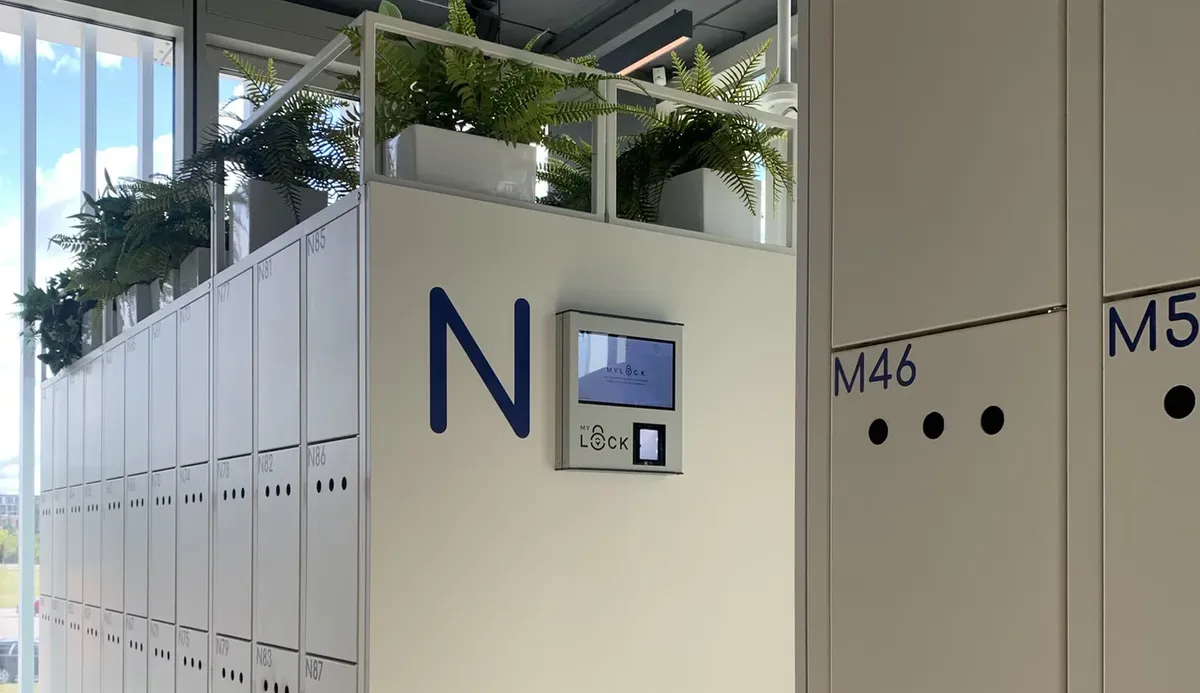
Vendor migration — keeping the existing locker boxes and swapping out the management electronics — is one of the rarer project shapes in our portfolio. The Kaunas project we delivered at the end of 2024 was the first of these we ever ran, and it taught us most of what we now know about the category. Its Malta sibling, which we shipped roughly a year later, has a different physical challenge but the same general project shape.
The Kaunas retrofit involved 300 metal lockers that were, frankly, old. The locker boxes themselves were in respectable shape — Eastern European industrial steel ages slowly. What was old was the lock hardware: a generation of electromechanical lock that pre-dated most current control-electronics conventions and was originally driven by a control system that had been out of vendor support for years. The site needed migration, but the path to migration was not the same path we took in Malta.
The site: 300 lockers, three buildings, an operator who needed visibility
The Kaunas operator runs a high-rotation facility split across three connected buildings on a single site, with lockers serving staff and visitors at all three. The original installation was about a decade old. The lockers themselves had been built to industrial spec — heavy-gauge steel, oversized hinges, the kind of locker that gets bolted to a wall once and stays there for the life of the building. They are not lockers you replace. They are lockers you find a way to live with.
The smart-locker management layer was the issue: a now-discontinued first-generation system that gave the operator no remote monitoring, no API, and no realistic upgrade path with the original vendor. They had been weighing rip-and-replace for the better part of a year. The site visit they invited us to turned out to be the first migration assessment we ran as a company — we had not yet developed the playbook that would later guide the Malta retrofit.
What we found on the bench
The Malta site visit was about confirming that an off-the-shelf-feeling integration was possible. The Kaunas visit was about confirming that a non-trivial integration was possible. Three findings shaped the project:
Non-standard voltage. The original locks were driven at 24 V DC. Our standard control electronics drive 12 V locks. The voltage difference is not a showstopper on its own — voltage conversion is a solved problem — but it meant every connector board we shipped would need a step-up stage instead of being a passive interface.
Non-standard pin layout. The electrical interface on each lock used a four-pin connector with a pin order that did not match anything in our standard parts library. We could not just plug our boards into the existing harnesses. Each row would need a small adapter loom that mapped the original pin order onto a layout our boards could accept.
Cabling reachable but tight. The wiring runs were accessible — the original installer had laid them in surface trays rather than burying them — but the trays were full, and there was no room for parallel runs. Anything new we put in had to replace something old, not sit alongside it.
None of these were deal-breakers individually. Together they meant the migration was going to be more of a custom electronics job and less of an off-the-shelf swap. We told the client honestly that the Kaunas project would cost a little more than a typical retrofit because of the bespoke interface work, and that the labour profile would skew earlier in the project — more bench time before we showed up on site. They agreed.
The work that happened on the bench
Before any travel, our electronics team built two things specifically for this site:
A 12 V → 24 V step-up board sized to drive the original lock solenoids reliably across the expected duty cycle. We over-spec'd the converter rating so a stuck-open solenoid would not cook the board, which is the kind of failure mode that has bitten retrofit vendors before.
A custom adapter harness that translated the lock-side four-pin connector into the standard pin order our control boards accept. We made these in batches matched to the row counts at the site, with a couple of spares per batch so a damaged harness on install day was a five-minute swap, not a delay.
We tested both against a sample lock the client had shipped us from the site — the only way to validate the design without surprises. By the time the install crew flew to Lithuania, every electronics question had been answered in our workshop.
The on-site work
With the interface problems solved on the bench, the on-site portion was more familiar — closer to a normal MyLock install with the addition of a harness swap per row. Per section, the workflow was:
- Decommission and remove the original vendor's central control unit. Most of the original electronics came out cleanly; some required cutting brittle cable ties that had hardened over the years.
- Install our 12 V control electronics and the step-up boards into the existing equipment cavity. Where space was too tight, we mounted into a small auxiliary enclosure beside the original location.
- Replace the lock-side connector pigtails with our custom adapter harnesses. This was the genuinely new step compared to Malta — every lock got a tiny piece of hardware retrofit at the point of connection.
- Cable the new electronics into our touchscreen terminal and bring the section online in MyLock Cloud.
In total, more than 300 lockers were migrated. The physical install was lighter than the Malta migration on a per-locker basis — much less metal cutting, since the original installer had left clean mounting points — but the per-locker electronics work was heavier. It washed out roughly the same overall labour profile, distributed differently.
What the client got after migration
The same operational outcomes we had delivered in Malta, applied to a site that had been operating without them for a decade:
Live status across all three buildings. The operator can now see, from one screen, which lockers are occupied across all three buildings. Before this migration they had to physically walk between buildings to know.
Cross-building rule enforcement. Conditional access — expiration windows, time-of-day rules, cleaning flags — applied uniformly across the entire 300-locker fleet. The previous platform had treated each building's locker bank as a separate island.
API onboarding. The operator's HR system feeds new staff records into the locker assignment flow automatically, with the same lifecycle behaviour described in the Bucharest case study.
Hardware that lives another decade. Critically: the lockers themselves did not need to be touched. The site got a modern management platform on top of physical hardware that still has many useful years left in it.
The takeaway on older hardware
If you are operating a smart-locker installation that is more than five or six years old and the existing vendor's platform is not growing with you, the question we get most often is: "are our lockers too old to migrate?" The honest answer is: probably not, but it depends on what is inside the door, and the only way to know is to take one apart.
What makes a migration viable on aging hardware:
- The lock mechanism is still mechanically sound. Worn-out solenoids are not worth retrofitting around; they are worth replacing with new locks.
- The electrical interface can be physically reached. Even if the connector layout is non-standard, an accessible connector can be adapted. A potted-in, unreachable connector cannot.
- The lock voltage is consistent across the fleet. If the original installer mixed lock generations within the same site, you can still migrate, but the per-row electronics design gets more complex.
If you operate a fleet you think might be too old for retrofit, the cost of a site visit and a bench evaluation is much lower than the cost of starting over. Get in touch and we will tell you honestly what we see.
This was the first of two vendor-migration retrofits we have written about. The Malta sibling, which we delivered roughly a year later, is the comparison piece.